


Transitioning from a project-based to a product-based approach for digital value delivery requires a significant shift
Overview
Transitioning from a project-based to a product-based approach for digital value delivery is a significant shift that impacts strategy, funding, processes, skills, and organizational culture. Many companies embark on this journey to drive profitability, ensure revenue stability, and create lasting customer value. However, the transition is complex and requires overcoming several challenges.
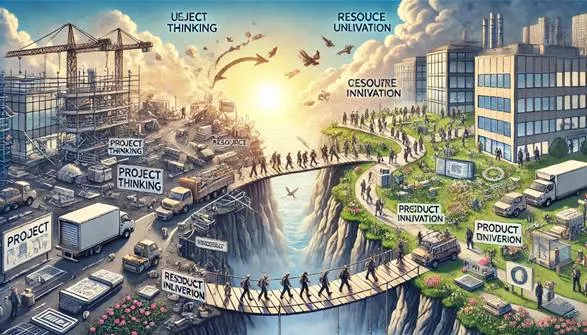
1. Shifting Strategy & Mindset
✅ From Short-Term to Long-Term Thinking: Projects have fixed timelines, while products require continuous investment and iteration. Leaders must adopt a long-term product vision.
✅ Breaking Down Organizational Silos: Many organizations are structured around project-based teams, making cross-functional collaboration difficult. A product approach requires alignment across departments.
✅ Redefining Success Metrics: Projects focus on scope, time, and budget, whereas product-driven organizations prioritize customer outcomes, adoption, and continuous improvement.
2. Rethinking Funding Models
✅ Moving from Fixed Budgets to Continuous Investment: Traditional project funding follows predefined business cases, whereas product funding requires ongoing investment based on value delivery.
✅ Shifting from CAPEX to OPEX: Finance teams often struggle with moving from CAPEX-based project funding to OPEX-based product investment models. Strong governance and stakeholder buy-in are essential.
3. Embedding Customer-Centric Product Discovery
✅ From Internal Requirements to Market Validation: Many organizations execute stakeholder-defined requirements rather than validating ideas with real users.
✅ Measuring Outcomes, Not Just Output: Project success is measured by deliverables, whereas product success is determined by solving customer problems and delivering real value.
✅ Overcoming Cultural Resistance to Experimentation: Teams accustomed to rigid planning may resist iterative learning, experimentation, and pivoting. Encouraging a test-and-learn mindset is crucial.
4. Evolving Design & Delivery Processes
✅ Adopting Agile & Lean Practices: Shifting from a project-driven model to continuous product development requires embracing agile methodologies, continuous integration, and iterative releases.
✅ Fostering Cross-Functional Collaboration: Design, engineering, and business teams must work closely together, yet many organizations remain functionally siloed.
✅ Addressing Legacy Systems & Technical Debt: Product teams require scalable, maintainable technology, but outdated systems often hinder rapid iteration.
5. Building Product Development Skills & Capacity
✅ Developing Strong Product Management Expertise: Many organizations lack experienced product managers to drive strategy, prioritize roadmaps, and lead discovery.
✅ Bridging Talent Gaps: Engineers, designers, and business teams need training in discovery, experimentation, and iterative delivery.
✅ Ensuring Team Stability & Autonomy: Product teams need long-term ownership to build deep domain knowledge, but project-based structures often rotate teams frequently, causing knowledge loss.
6. Measuring Success & Driving Continuous Improvement
✅ Defining Meaningful Product KPIs: Traditional project metrics (on-time, on-budget) are insufficient. Companies must track product success through customer adoption, retention, and revenue impact.
✅ Establishing Data-Driven Feedback Loops: Continuous improvement requires strong analytics, user feedback mechanisms, and a culture of iteration—elements often underdeveloped in project-driven organizations.
Conclusion
The transition from project to product is not just an operational change—it’s a fundamental shift in mindset, processes, and culture. Companies must align strategy, funding, and skills while fostering a customer-centric approach to product development. Success requires leadership commitment, continuous investment, and a relentless focus on delivering long-term value.