


Imagine boarding a ship that was designed to be both a luxury cruise liner and a high-speed naval vessel. The engineers built it with the best intentions—cutting-edge materials, sleek automation, and modular cabins that transform at the push of a button. But there’s a problem: no one can agree whether it should race through storms or offer smooth, champagne-filled evenings on deck. The result? A ship that doesn’t quite do either well.
This is what happens when software engineering in a product-centric company gets lost between scalability, speed, and strategic clarity. We hail engineering as the backbone of digital products, yet many organizations treat it as an assembly line rather than a strategic force. The contradiction is glaring—companies want their engineers to be agile, innovative, and scalable while simultaneously chaining them to outdated structures, performance metrics, and misguided expectations.
Engineering vs. “Engineering Theater”
If you’ve spent time in tech, you’ve probably seen it firsthand: engineering teams producing massive roadmaps, meticulously following Agile rituals, and drowning in DevOps dashboards—without delivering meaningful impact. This isn’t good engineering. This is engineering theater.
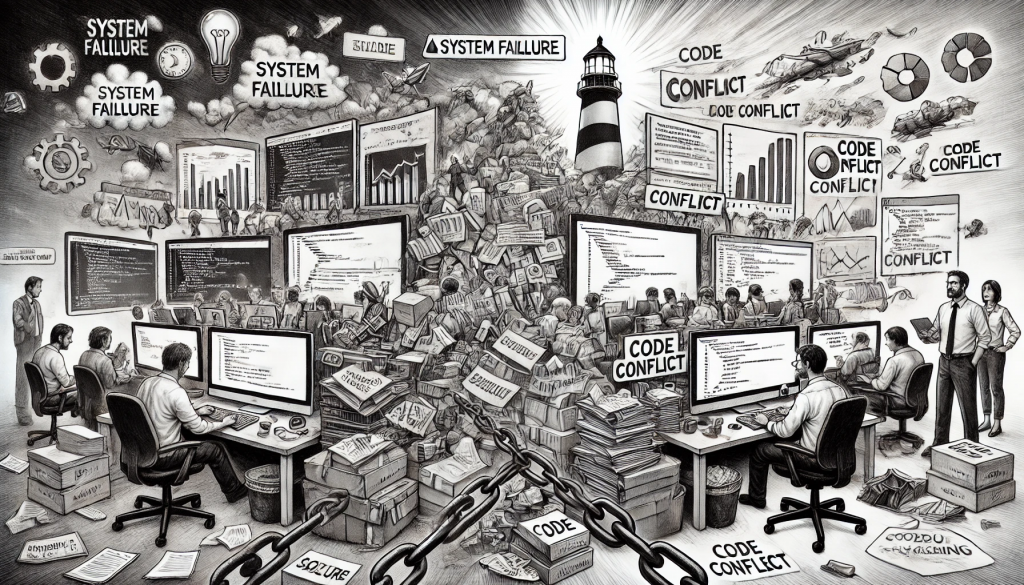
Engineering is not about how many sprints a team completes, how many microservices they deploy, or how impressive their GitHub activity graph looks. It is about whether the right product decisions are made efficiently, securely, and scalably.
Yet, many companies misunderstand this. They equate engineering maturity with process maturity, mistaking compliance with best practices for actual innovation. The assumption? That tighter processes = higher velocity. The reality? More often than not, these structures slow teams down, adding unnecessary friction.
Where It Works, Where It Fails
Success Stories: Engineering That Enables Product Growth
Let’s look at the companies that get it right. Netflix, Stripe, and Spotify have something in common: they understand that engineering is about removing barriers to product success, not adding layers of bureaucracy.
- Netflix: Engineers have the freedom to deploy directly to production within guardrails, ensuring both innovation and stability. The result? Faster product iteration without sacrificing quality.
- Stripe: A developer-first approach ensures that every engineer is a product thinker, meaning engineering decisions are always tied to business impact.
- Spotify: Engineering culture is built around autonomy and alignment, allowing teams to experiment and optimize at scale without micromanagement.
Failure Cases: When Engineering Becomes an Anchor
Contrast this with large enterprises that enforce excessive governance, rigid compliance structures, and slow decision-making cycles.
- The “No One Owns It” Syndrome: Decisions are made by committee, leading to weeks of meetings and no clear accountability.
- Velocity Without Direction: Teams optimize for speed rather than outcomes, delivering features without understanding their impact on the product.
- Legacy Thinking in a Cloud-First World: Many companies still treat cloud engineering as a “lift-and-shift” of old practices rather than rethinking architecture for flexibility.
These failures stem from misaligned incentives—treating engineering as a cost center rather than the strategic core of product development.
Who Really Benefits from Good Engineering?
This is the question many companies fail to ask. Who actually benefits from a well-structured engineering culture?
The right answer should be: everyone.
✅ Users get a more stable, secure, and innovative product.
✅ Product teams can iterate faster with fewer bottlenecks.
✅ Executives see increased agility in responding to market shifts.
Yet, in many organizations, the biggest beneficiary of engineering efforts is… engineering itself. Teams become so focused on optimizing internal processes that they lose sight of their actual purpose: delivering real-world value.
Rethinking Engineering as a Strategic Asset
So, how do we fix it? We start by abandoning the obsession with engineering for engineering’s sake and embracing a product-first engineering mindset. Here’s how:
1️⃣ Engineering Must Be Outcome-Driven, Not Process-Driven
- Stop measuring success by deployment frequency or Jira tickets closed.
- Instead, tie engineering work to product and business success metrics.
2️⃣ Empower Engineers as Product Thinkers, Not Just Code Writers
- Encourage engineers to engage in customer discovery and product strategy sessions.
- Treat engineering as a value creation function, not just a delivery pipeline.
3️⃣ Architect for Flexibility, Not Just Scalability
- Many companies prioritize scalability before necessity, adding complexity without real benefit.
- Instead, design systems that can adapt and evolve with product needs.
Final Thought: The Lighthouse Principle
Engineering should be like a lighthouse, not a cargo ship. It illuminates the way forward for product teams, guiding decisions with clarity, adaptability, and long-term vision. Instead of focusing on how much we build, the real question should be: Are we building the right thing, the right way, at the right time?
When companies understand this, engineering transforms from an operational bottleneck into a strategic advantage—one that truly propels product innovation forward.