


The Gospel of Speed—And the Quiet Death of Quality
“Just prompt the AI and let it rip!”
That’s the sermon echoing through today’s engineering corridors. No design reviews, no backlog debates, no stakeholder in sight—just a lightning-fast chatbot spitting code before the pizza turns cold.
On the surface, it looks glorious:
- Cycle-time charts shoot skyward.
- Road-maps shrink from quarters to weekends.
- Everyone feels like an innovator… for about six months.
But velocity without veracity is little more than Prompt-and-Pray—and it turns product launches into slow-burn time bombs.
Why? Because AI doesn’t argue back. It lovingly recycles every half-baked wish into executable ambiguity—no questions, no raised eyebrows, no sober second thought. The defects aren’t apparent at first; they lurk quietly in edge-cases, compliance gaps, and security side doors. Then one Tuesday at 03:17, someone’s pager lights up, and you discover your “10× faster” feature can also 10× the refund pile.
Need a second opinion? Mirko has already sounded the alarm in his brilliant piece “To fail is human. But with AI, you’ll fail faster and at scale.” Read his cautionary tale here → Pivot Point Blog – Mirko Willms. It’s the perfect companion piece to the one you’re reading now.
Anatomy of a Time-Bomb: the Three-Step Recipe for a Million-Euro Recall
Think of Prompt-and-Pray as a chain-reaction engine. Once fuel, oxygen, and spark line up, detonation is merely a matter of timing.
| Ingredient | How it shows up in real life | Why it turns pricey |
|---|---|---|
| Fuel – Vague Requirements | Prompt: “Make sign-up frictionless, global, fun.” No flows, no constraints, no privacy clause. | Months later: Password resets fail, compliance is compromised, user data leaks, and fines of five figures per missing GDPR checkbox. |
| Oxygen – Governance Vacuum | “Anyone can ship” becomes “No one owns” when the git history is a stampede of anonymous AI commits. | Audits and RACI charts become archaeological digs; the incident manager finds nobody who “owns” module X. |
| Spark – False Confidence | A flashy prototype demos perfectly—so leadership green-lights rollout without architectural due diligence; release gates evaporate. | Under load, the micro-service melts; the incident-response war room runs out of coffee and goodwill. |
Quality-Management Counter-Moves: Turn Speed into Sustainable Momentum
Good news: you don’t need heavyweight bureaucracy to defuse the bomb. Four lightweight levers will do.
| QM Lever | What to Add (lightweight!) | Why It Works |
|---|---|---|
| Definition of Ready 2.0 | A five-point Prompt Quality Checklist: intent, constraints, testability, traceability, and security. | Forces clarity before AI immortalises ambiguity in code. |
| Prompt Steward | Every prompt file names a human owner in both a YAML header and the RACI chart. | Restores accountability in the “everyone’s a developer” circus. |
| AI-PDCA Loop | Plan (crisp requirement) → Do (AI draft) → Check (automated + human review) → Act (refine prompt/code). | Re-installs learning cycles—Agile’s forgotten promise. |
| Resilience Metrics | Prompt-Ambiguity Index, Ownerless-Code Ratio, MTTR-Prompt-Fix. | Measures the input quality, not just throughput vanity metrics. |
None of these bans AI or throttles creativity; they simply inject enough structure to keep the rocket pointed away from the orphanage.
Case Study: From Prompt-and-Pray to Prompt-and-Proof
Context: A payroll SaaS hurtling from Series-B chaos toward IPO scrutiny, replaced “move fast and pray” with the four levers above.
| Metric | Before QM (Prompt-and-Pray) | After QM Counter-Moves | Δ |
|---|---|---|---|
| Time to first prototype | 18 h | 24 h | +6 h |
| Time to defect discovery | 11 days | 2 days | –9 days |
| Defects escaping to prod / sprint | 37 | 8 | –78 % |
| Critical compliance issues / audit | 12 | 0 | –100 % |
| Net Promoter Score | 14 | 46 | +228 % |
Six extra hours up-front bought them nine days of firefighting avoided and a compliance bill reduced to pocket change. That’s speed worth bragging about.
Would you board that Plane?
Picture an airline announcing:
“Our planes now assemble themselves via chatbot prompts. We skipped wind-tunnel tests to hit sprint goals.”
Would you:
A) Book a seat B) Book life insurance C) Call the regulator?
If you didn’t pick A, Prompt-and-Pray shouldn’t govern your software either. Quality isn’t a drag on velocity; it’s the engine maintenance that keeps velocity from ending up on fire or losing parts midflight.
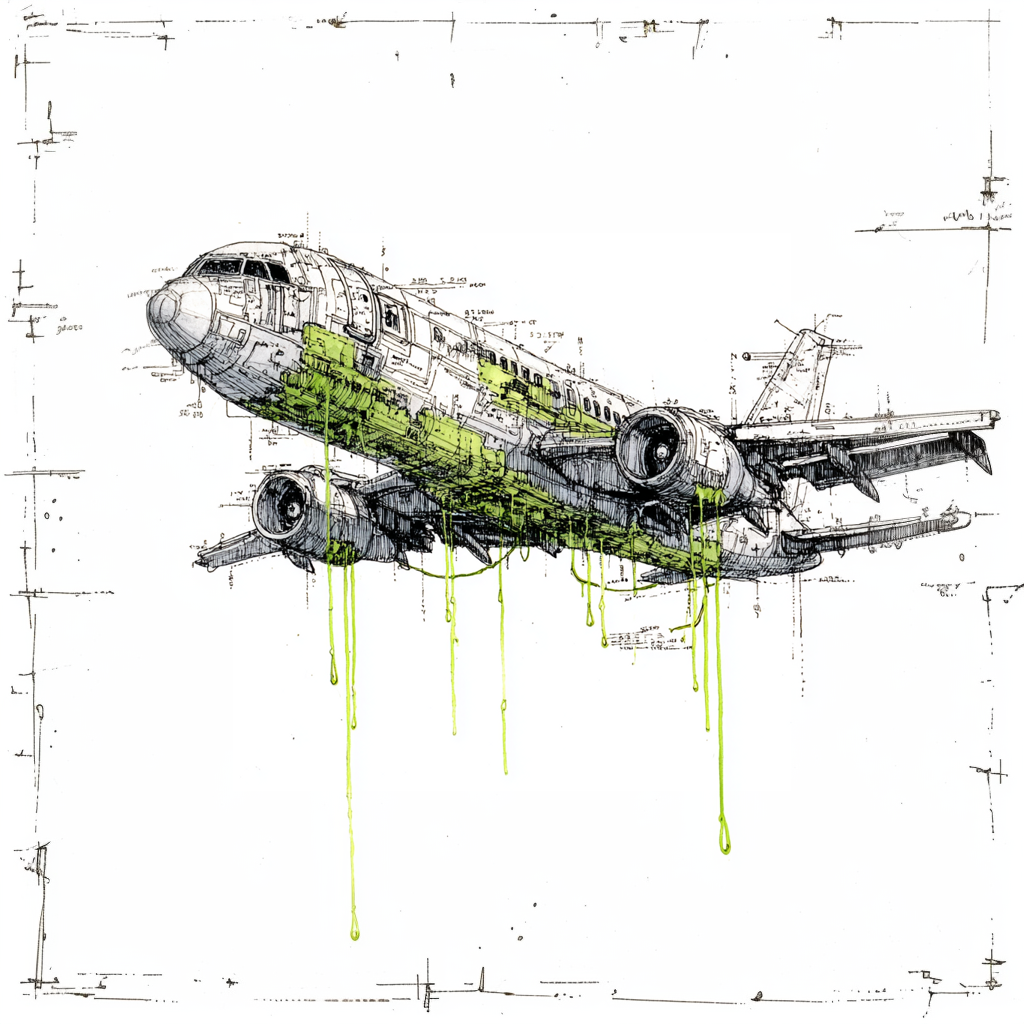
Ship fast, sure—but stop treating prayer as a deployment strategy.