


Act 1: It started with one hotfix…
A client once told me, “We haven’t had a major incident in months — just a lot of little ones.”
It sounded like a win.
Until we looked closer.
Customer satisfaction was down.
Engineers were overwhelmed.
Support was copy-pasting the same workaround for the third sprint in a row.
And when we traced it back?
It wasn’t just one thing. It was everything — decaying in sync.
The product discovery process had quietly stopped involving users.
The UX had become a maze of shortcuts and dead ends.
Architecture decisions were made “just to get it out the door.”
Testing was solid… until releases needed to go out on Fridays.
And support? They were logging incidents into a backlog nobody touched.
No explosion.
Just slow boil.
That’s how products die — not with a bang, but with indifference.
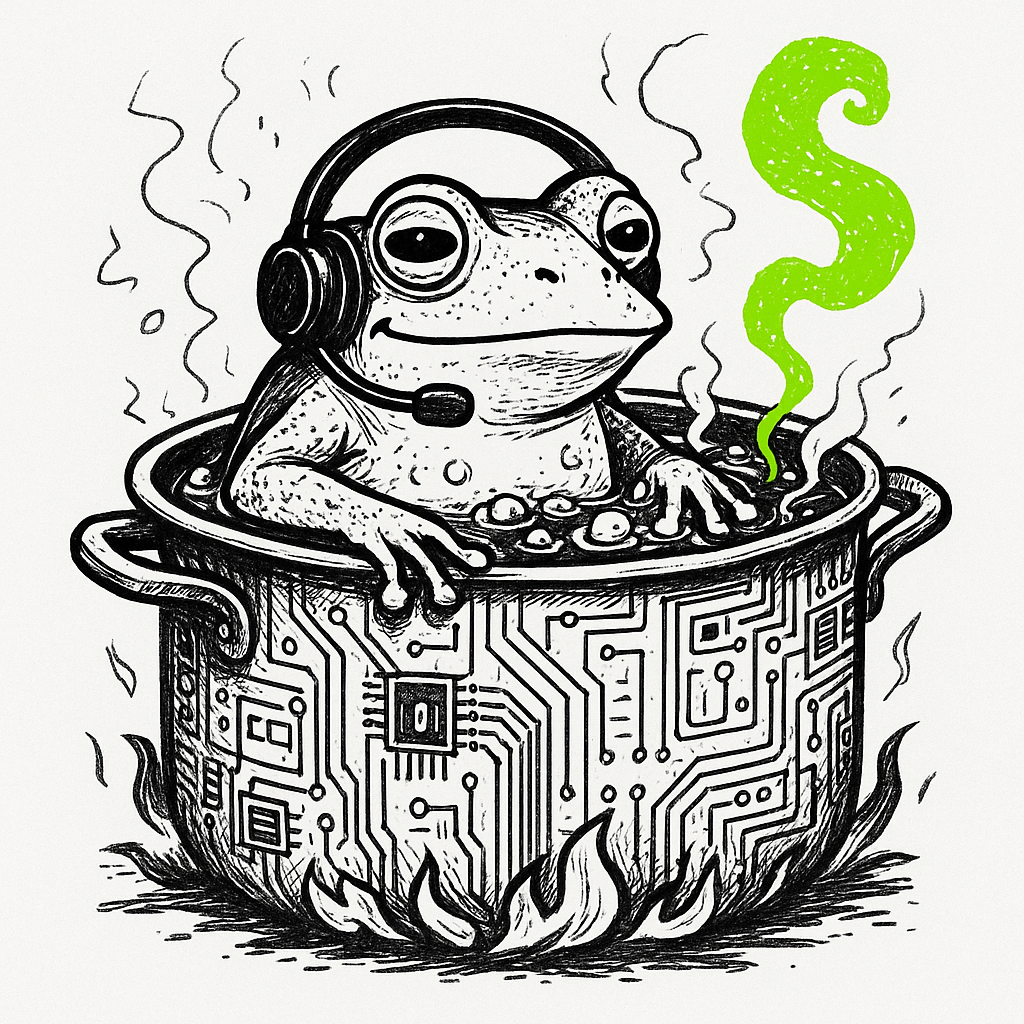
This is the boiling frog syndrome of software development — and it’s spreading far beyond testing.
Act 2: Mediocrity doesn’t announce itself — it accumulates
Most teams don’t fail dramatically.
They fail invisibly.
Here’s what it sounds like:
- “Let’s circle back to the UX later.”
- “It’s only a temporary architecture.”
- “We’ll refactor that after the release.”
- “It’s not a blocker — just a known issue.”
- “We’ll handle that in support.”
It feels harmless. Rational, even.
Until you zoom out.
And realize your entire product lifecycle has become one long list of deferred decisions and normalized decay:
- Product Discovery becomes backlog grooming.
- UX Design becomes Figma theater with no research.
- Architecture becomes a pile of decisions made by whoever shouted last.
- Engineering becomes feature shipping with stability duct-taped on.
- Testing becomes chasing bugs faster than they appear.
- Release Management becomes “Just don’t break prod again.”
- Incident Handling becomes “How fast can we silence this alert?”
Here’s the kicker:
Every one of these dysfunctions feels “fine” in isolation.
That’s the trick.
Just like the frog in the warming water, you don’t feel it — until everything around you is compromised.
And by then, even your high performers are disengaged, the roadmap is wishful thinking, and your next release might as well be a roll of the dice.
Act 3: Escape the pot. Reset the system.
So, what do you do when there’s no single fire to put out — just a quiet inferno of compromise?
You recalibrate the system. Here’s how:
1. Make the invisible visible
Run a Digital Balance Assessment across your full lifecycle — not just delivery.
- Where are you compensating instead of improving?
- Which processes look “efficient” but hide systemic risk?
- Where is technical debt being paid in user frustration?
This isn’t about red/yellow/green dashboards.
It’s about surfacing the heat you’ve stopped noticing.
2. Use decay as a diagnostic
When you see recurring incidents, don’t just fix them — ask what allowed them to recur.
- Are there unowned parts of your architecture?
- Are your testing failures just proxies for UX fragility?
- Is “fast delivery” masking the lack of maintainability?
Decay is a symptom. Treat the system.
3. Rewire how you define progress
KPIs like velocity and release frequency? They’re smoke signals — not health indicators.
Track:
- Time to restore
- Customer effort to resolution
- UX conversion friction
- Ownership clarity
- Defect recurrence by module
Because “done” is meaningless if it decays in production.
4. Coach your leaders first
Teams follow incentives. Leaders set them.
If your leadership can’t see decay, or worse — rationalizes it — the rot will grow.
Leadership enablement isn’t a nice-to-have. It’s the fire escape training you need before the next incident.
5. Make balance the product, not the byproduct
Stop optimizing functions in isolation.
- Velocity without architecture stability = speed to nowhere.
- Innovation without governance = chaos.
- UX without engineering alignment = designs that never survive dev.
Balance isn’t compromise.
It’s the only way to sustain progress.
Final word:
Your product isn’t broken.
It’s cooked — slowly, silently, and professionally.
Because nobody panics when a process slips.
Nobody raises a flag when a shortcut becomes policy.
And nobody gets fired for saying, “It’s fine — we’ve done it this way for months.”
Until customers walk.
Until teams burn out.
Until someone finally asks, “How did we get here?”
You didn’t get here from one bad decision.
You got here from a thousand small concessions —
that nobody challenged,
because everything still technically worked.
Well, it doesn’t anymore.
Time to turn off the burner.