

Financial controllers want predictability. Customers want value. Who are you really serving?
The comfort of output — and the cost of clinging to it
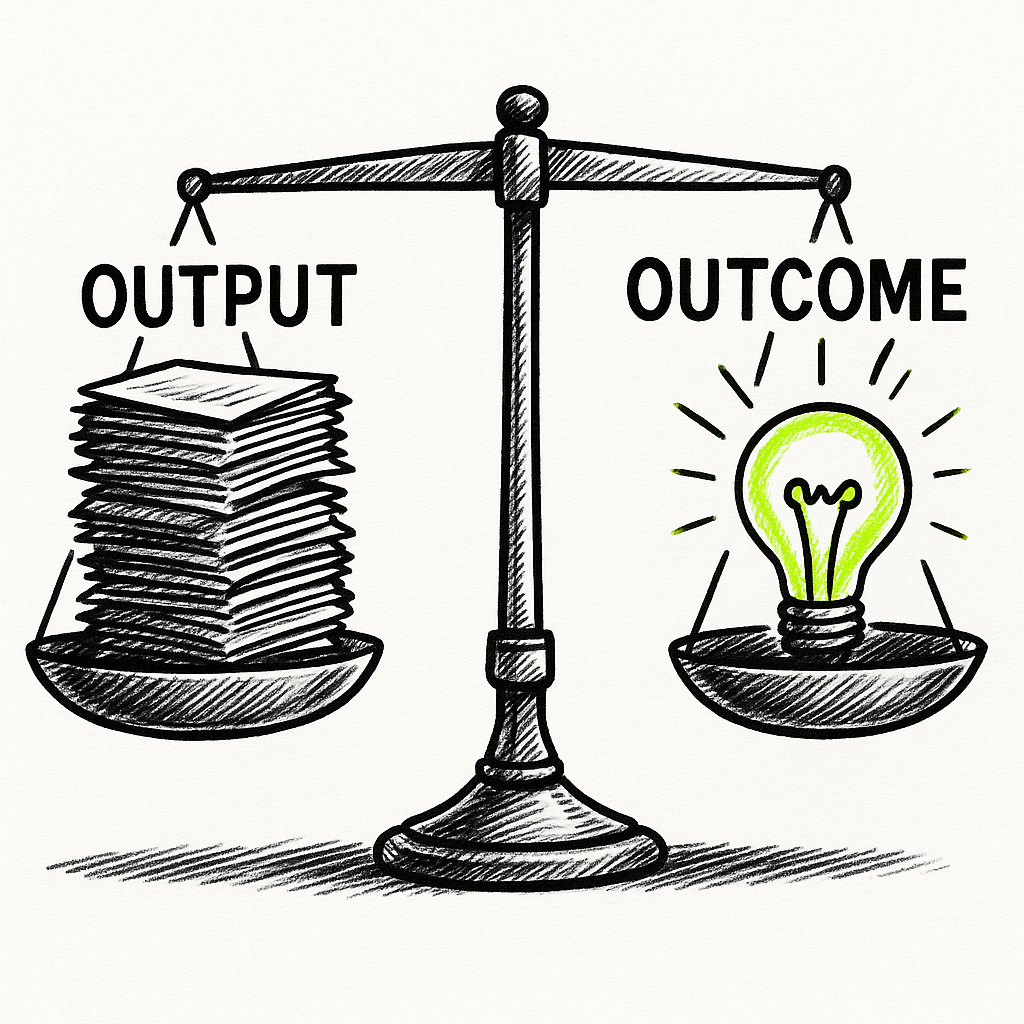
Let’s get one thing straight: output is seductive. It promises order. Forecastability. Clean metrics to satisfy spreadsheets and status reviews. But make no mistake — it’s a distraction masquerading as progress.
When a financial controller asks, “Will the output be met?” — they’re chasing a feeling of control, not a signal of success. And that’s exactly how teams end up building beautiful dashboards for products no one uses. Efficient execution of irrelevant work.
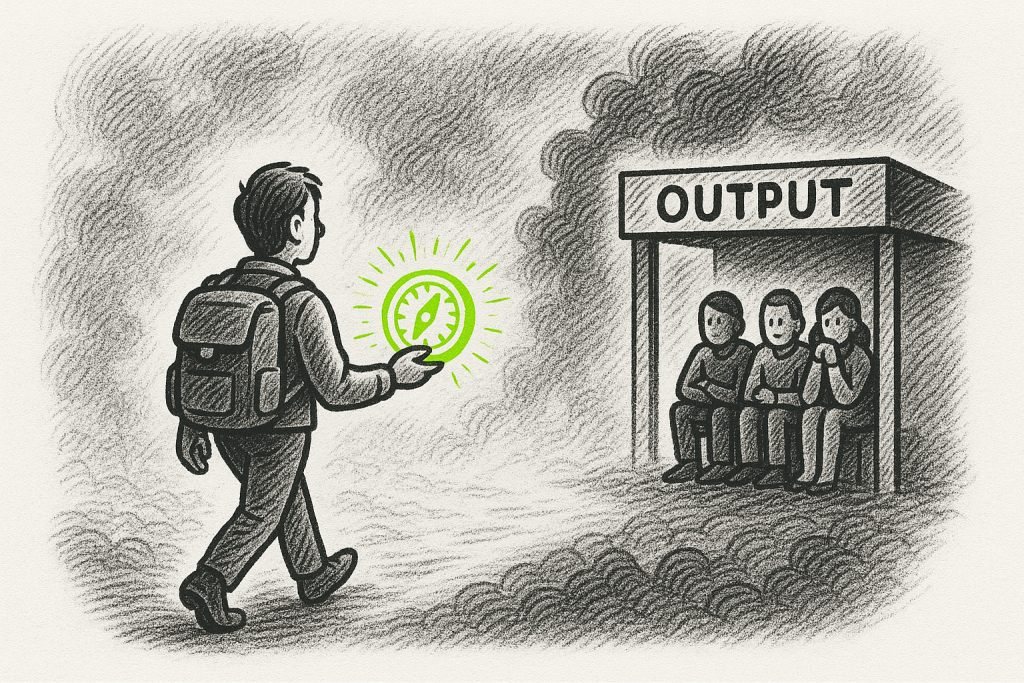
Output is a security blanket for those afraid of ambiguity. But value is created in ambiguity.
Real leadership means letting go of that blanket. It means moving past what’s easy to measure and stepping into what truly matters. That’s not reckless. That’s responsible.
How software inherited the wrong scoreboard
The idea that more output = more success comes from the manufacturing era. Crank more widgets off the line, grow your margins. That mindset worked fine when physical goods ruled the economy.
But software isn’t a factory line. It’s not about repeating steps. It’s about solving new problems, in new ways, for real humans.
When you judge software teams by how much code they push or how many story points they burn, you’re measuring the wrong thing. That’s like evaluating a football team on number of corner kicks. It says a lot about motion — and nothing about meaning.
Worse, it drives dysfunctional behavior:
- Shipping features nobody needs, just to hit a release target
- Logging activity instead of owning accountability
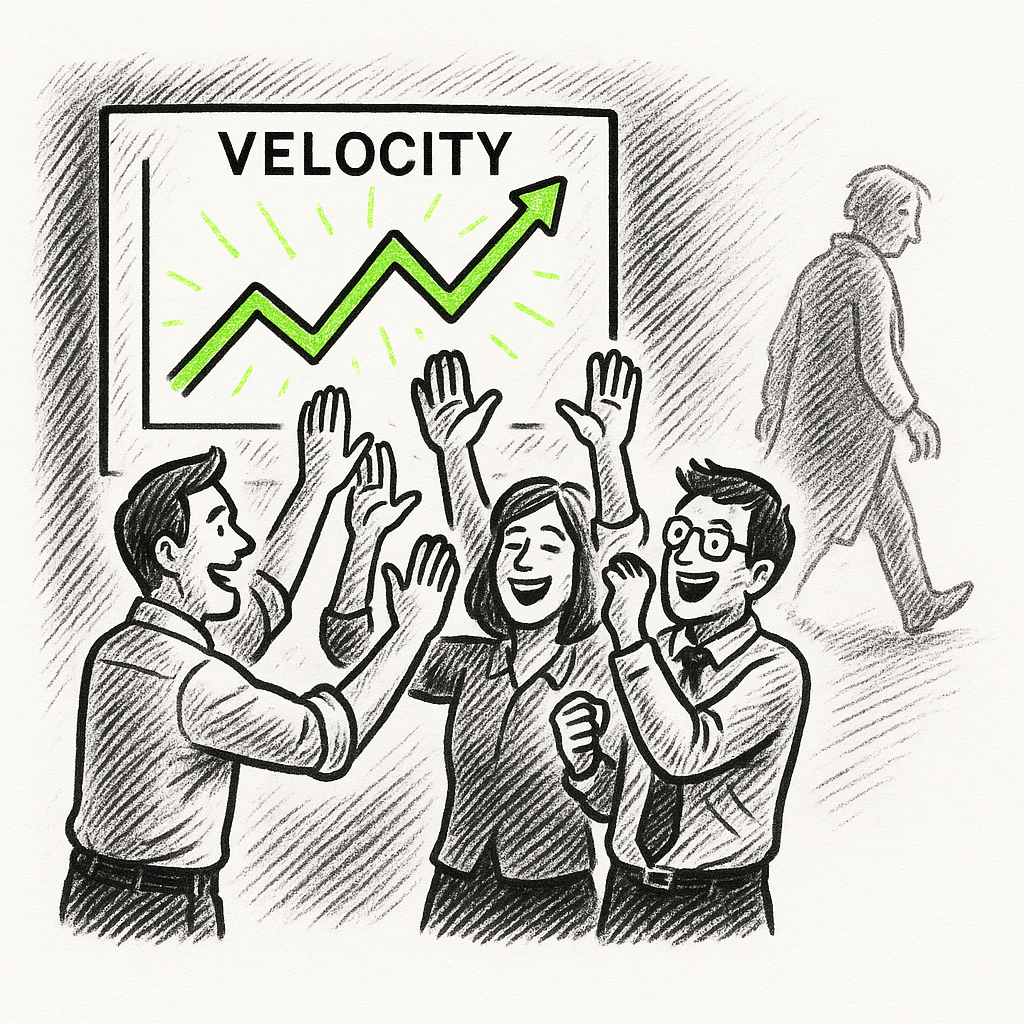
- Celebrating velocity over impact
The result? Teams that run fast in the wrong direction. Leadership reviews that reward effort instead of effect. And customers who quietly slip away.
It’s time to stop mistaking activity for achievement.
What outcome-first leadership actually looks like
If you want to lead through outcomes, not outputs, here’s what changes:
You stop asking:
- Did we ship all the features?
- Are all epics closed?
- What’s our burn rate?
You start asking:
- What did the customer do differently because of this?
- Where did we reduce friction or increase confidence?
- Did this move the needle on a real business objective?
That shift requires:
- Cross-functional alignment: Product, design, engineering, marketing — working from the same definition of success.
- Evidence-based decisions: Looking at user behavior, not just internal timelines.
- Comfort with iteration: Killing sacred cows, rethinking roadmaps, and learning as you go.
Yes, that’s messier. More ambiguous. But it’s also where innovation happens.
Predictability is great for supply chains. It’s deadly for product strategy.
The illusion of safety
Let’s be brutally honest:
You can ship every ticket, close every milestone, and publish a flawless sprint report… and still lose the market.
Because customers don’t care about your Jira board. They care about what your product enables them to do — better, faster, or with less pain.
Great products aren’t built by teams who deliver more.
They’re built by teams who learn faster.
That means shifting the spotlight:
- From roadmaps to results
- From release velocity to user value
- From “Are we done?” to “Is it working?”
If that sounds risky, ask yourself this:
What’s the real risk — having uncertain progress toward something valuable?
Or being certain you’re nailing something irrelevant?
A final word to the output faithful
If your job is to manage risk, here’s a truth you need to hear:
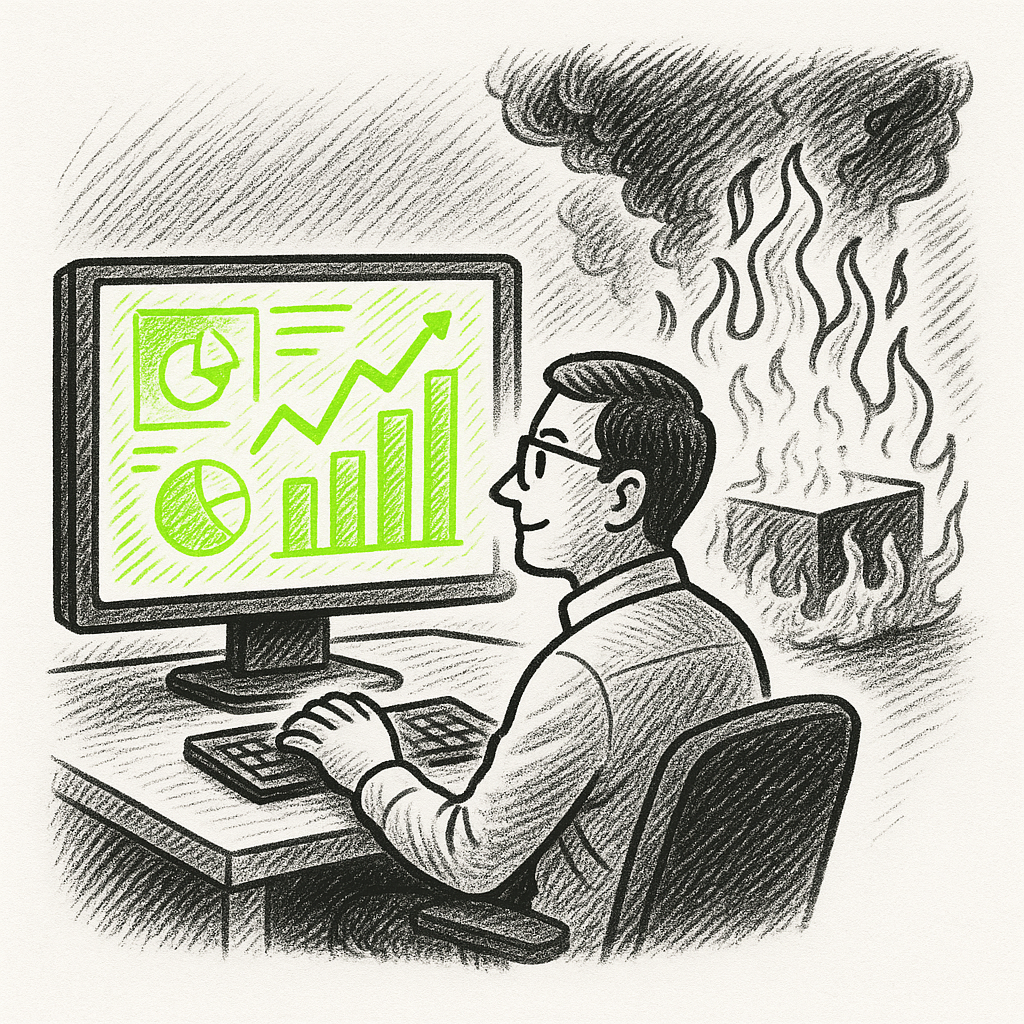
High output without outcome is a liability.
It creates bloat. Confusion. Technical debt without strategic return.
If you’re still optimizing teams to be predictably productive,
while ignoring whether their work changes anything that matters,
then you’re not managing risk. You’re compounding it.
So next time someone asks, “Will the output be delivered?”
try this instead:
What outcome are we actually trying to create?
And how will we know when we’ve made a difference?
Because in the end:
Output is easy. Outcome is earned.
And your customers can tell the difference.
Ready to stop measuring motion and start driving meaning?
Your product deserves more than just burn-down charts. It deserves impact. Let’s talk about how to get there.