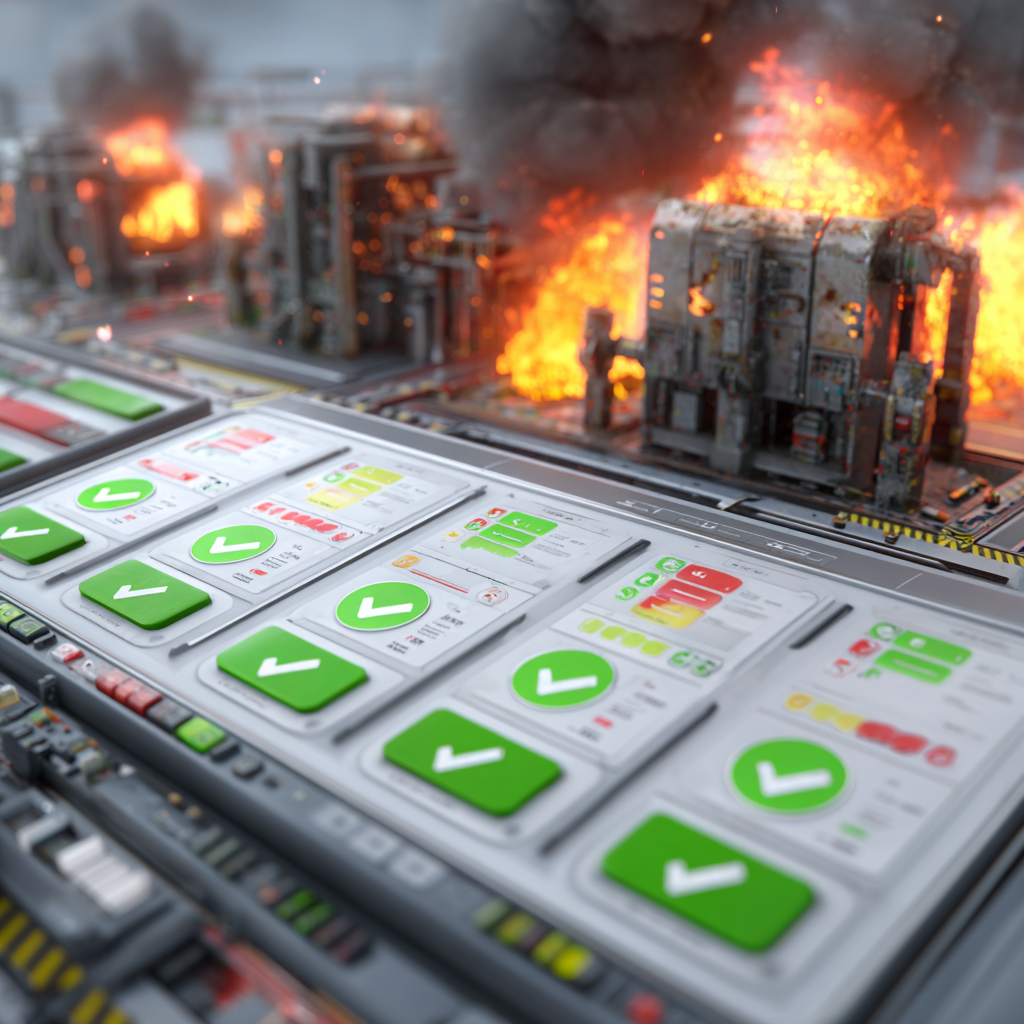


The Fragility You’re Not Testing
In the software world, we obsess over performance benchmarks, CI pipelines, and automated test coverage. We build redundant clusters and write resilience logic for when our services go sideways. Yet, the most brittle part of the system often hides in plain sight: the delivery chain.
You know, those third-party vendors, deployment tools, external APIs, and “trusted” service providers we rely on to keep everything humming. Until they don’t.
Let’s bust a common belief wide open: “Redundancy is a luxury for enterprises.” It’s not. It’s survival gear for any software company that doesn’t want to be the next horror story on LinkedIn. Because here’s the uncomfortable truth: one minor supplier failure can bring your entire delivery promise to a screeching halt. And your customers? They won’t care if it was your cloud provider or your fault. To them, it’s just “down.”
What Broke? Not Your Code — Everything Around It
Let me guess. Your team has 90% test coverage, pristine pull request hygiene, and a dashboard full of greens. But the build system is hosted by a third-party service you don’t monitor. Your database backups are stored in one region. Your key microservice calls an API from a startup that went belly-up last week.
You’ve optimized your product for internal robustness, but what about the external ecosystem it runs on?
Here’s what I’ve seen collapse digital teams faster than any bug:
- A CI/CD tool that changed its billing model overnight and locked thousands of builds.
- A critical monitoring service that failed silently for 36 hours. No alerts. Just customer complaints.
- An expired SSL cert from a partner’s endpoint breaking every login on Monday morning.
- An outsourced team in another timezone going radio silent during a production crisis.
These aren’t edge cases. They’re the new normal.
Build Quality Beyond the Code
Crisis-proofing your delivery chain starts with one mindset shift: treat everything between commit and customer as a quality-critical system.
Start here:
- Map Your Dependencies: Not just libraries — vendors, APIs, contractors, tools, services. Who owns what? Who’s responsible when it breaks?
- Simulate Supplier Failures: What if your CI/CD tool vanishes tomorrow? Or GitHub goes dark for 24 hours? Run fire drills. Watch what fails.
- Introduce Redundancy Where It Hurts: One database region? Bad. One payment provider? Risky. One person who knows the deploy script? Dangerous.
- Track SLA/Support Contracts Like a Hawk: If it’s critical, make sure you have escalation paths and visibility. You wouldn’t ship code without version control — don’t ship delivery without control either.
- Measure What Matters: Uptime is nice. Resilience is better. Track metrics like Time to Recover from External Failure, Not Just Internal Bugs.
Resilience isn’t a checkbox. It’s a muscle. If you don’t flex it, it won’t hold when the pressure comes.
Look, I’m not saying you should live in fear of every webhook and vendor. But stop pretending the chaos only lives in your codebase. The modern software product is an orchestra of dependencies, and quality today means ensuring that when one instrument drops out, the music doesn’t stop.
So next time you’re polishing your test suite or planning a sprint, ask yourself:
Have we tested the delivery chain? Or are we just hoping our luck holds?
If it’s the latter, maybe it’s time for a little paranoia. The good kind.