


The Great Agile Misunderstanding
“Agile means we don’t need plans anymore.” Heard that one before? Probably even from someone on your leadership team. It’s the single most destructive myth floating through digital product companies today. Agile, in its truest form, is not the Wild West of product development. It’s not an all-you-can-eat buffet of ideas and sprints without purpose.
The belief: Agile is freedom. We can do what we want, change direction daily, skip the boring stuff like specs and planning, and still magically deliver results.
The uncomfortable truth: Agile is discipline disguised as flexibility. It’s a system designed to create predictable adaptability, not creative chaos. And if your Agile implementation feels like chaos? That’s not flexibility. That’s organizational failure in motion.
What Agile Actually Demands
Let’s strip away the sticky notes and buzzwords. Real Agile requires:
- Clarity of purpose. Why are we building this?
- Prioritization discipline. What matters most right now?
- Commitment to cadence. Standups, retros, reviews — not just ceremonies, but accountability loops.
- Defined roles and responsibilities. Who owns what, and how do decisions get made?
- A backlog that is groomed, not guessed. No more “we’ll figure it out as we go.”
In short: Agile needs structure to enable its strengths. Without it, teams float aimlessly. Or worse — run fast in every possible direction at once.
The Real Cost of Improvisation
Here’s what “Agile” without structure really leads to:
- Endless rework. Because goals keep changing mid-sprint.
- Burned-out teams. Constant context-switching, no rhythm, and no clear definition of done.
- Poor quality. Shortcuts replace sustainable practices. QA is reactive, not embedded.
- Zero learning. Retrospectives become group therapy sessions instead of systems for improvement.
- Stalled velocity. You’re moving. But no one can say where or why.
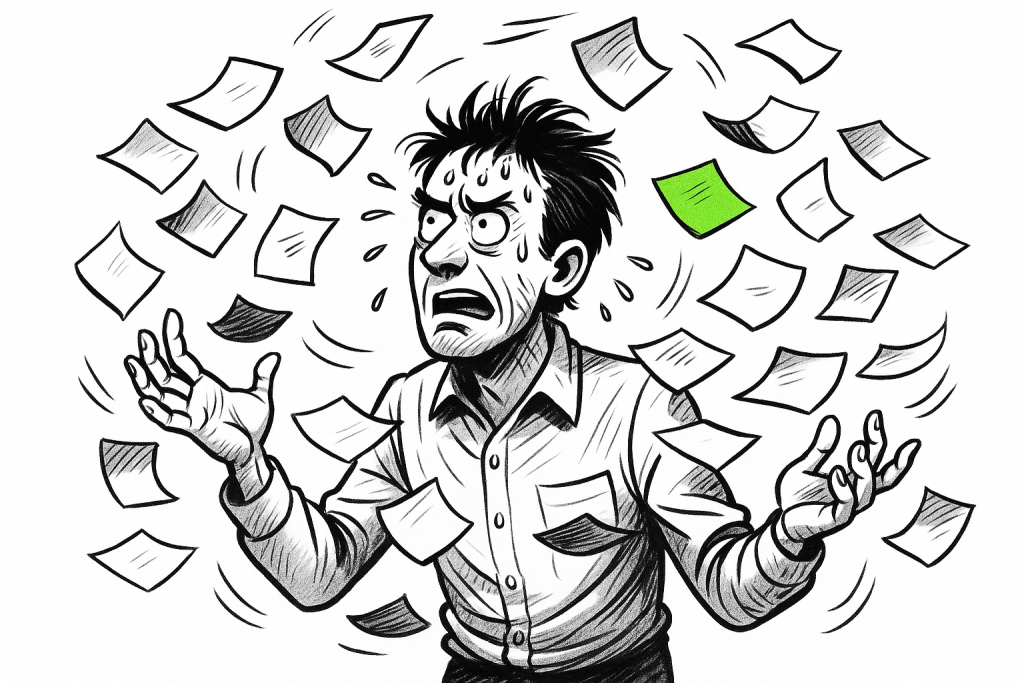
This isn’t agility. It’s a slow death spiral camouflaged as freedom.
From Chaos to Clarity
So, how do we reclaim Agile from the improvisation crowd?
- Reconnect Agile to purpose. Every sprint must serve a strategic goal. Not just “build something.”
- Teach discipline as a virtue. Scrum isn’t oppressive. It’s a framework for flow.
- Audit your artifacts. Backlogs, boards, definitions of done — are they serving clarity or creating confusion?
- Make leadership visible. Agile without strategic steering is like a ship with a drunk captain. Empower product leads to say no.
- Balance flexibility with finish. Adapt, yes. But always finish what you start.
Final Thought: Agile is Earned
Agility is not the starting point. It’s the outcome of doing the hard, disciplined, structured work consistently.
So the next time someone brags about how “Agile” their team is because they don’t follow a plan? Smile politely. Then ask them how often they ship, how fast they learn, and how stable their systems are.
Because chances are, they’re not Agile. They’re just unorganized.
Comment to start a real Agile discussion: What’s one ‘fake Agile’ behavior you’ve seen wreck a good team?